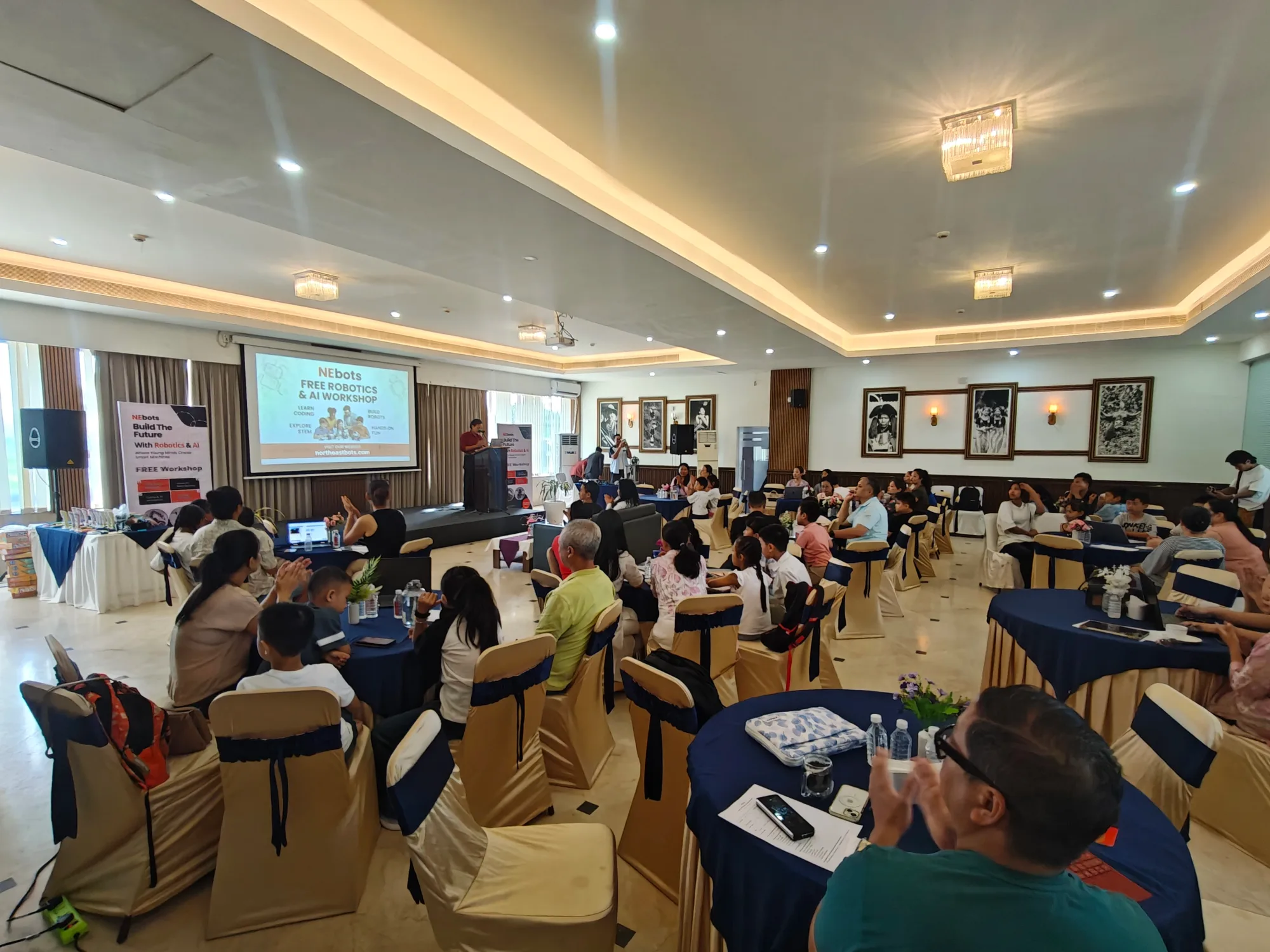
On Sunday 16 August 2026, NEbots ran its first free Robotics & AI workshop at the Donyi Polo International Hotel in Itanagar. More than twenty students aged 7 to 18 came with their parents, and by the end of the afternoon every one of them had made something they could hold in their hand and take home.
This is what happened, in case you could not make it, and what we learned about what families in Arunachal Pradesh actually want from STEM education.
A hall set up as a workshop, not a lecture
The easiest way to lose a room of nine-year-olds is to talk at them for an hour. So the hall was arranged as a build floor: round tables for small groups, a demonstration table of robot kits along the wall, and the stage reserved for a short opening only. Parents sat at the same tables as their children rather than at the back, which turned out to matter more than we expected.
Why a free workshop, and why Itanagar
NEbots was started in Arunachal Pradesh for a specific reason: children here should not have to leave the North East to touch real hardware. Robotics kits, 3D pens and micro-controllers are not exotic. They are just rarely in the room. A free workshop was the fastest way to put them in front of local families with no barrier at all: no fee, no prior experience, no laptop of your own required.
The first build: 3D pens in every hand
The first hands-on block gave each student a 3D pen and a template to trace. Molten filament goes down as a line, cools in seconds, and then the drawing lifts off the page as an object. For a room of primary-school students, that moment, when a flat sketch becomes a thing you can pick up, is the one that gets the loudest reaction of the day.
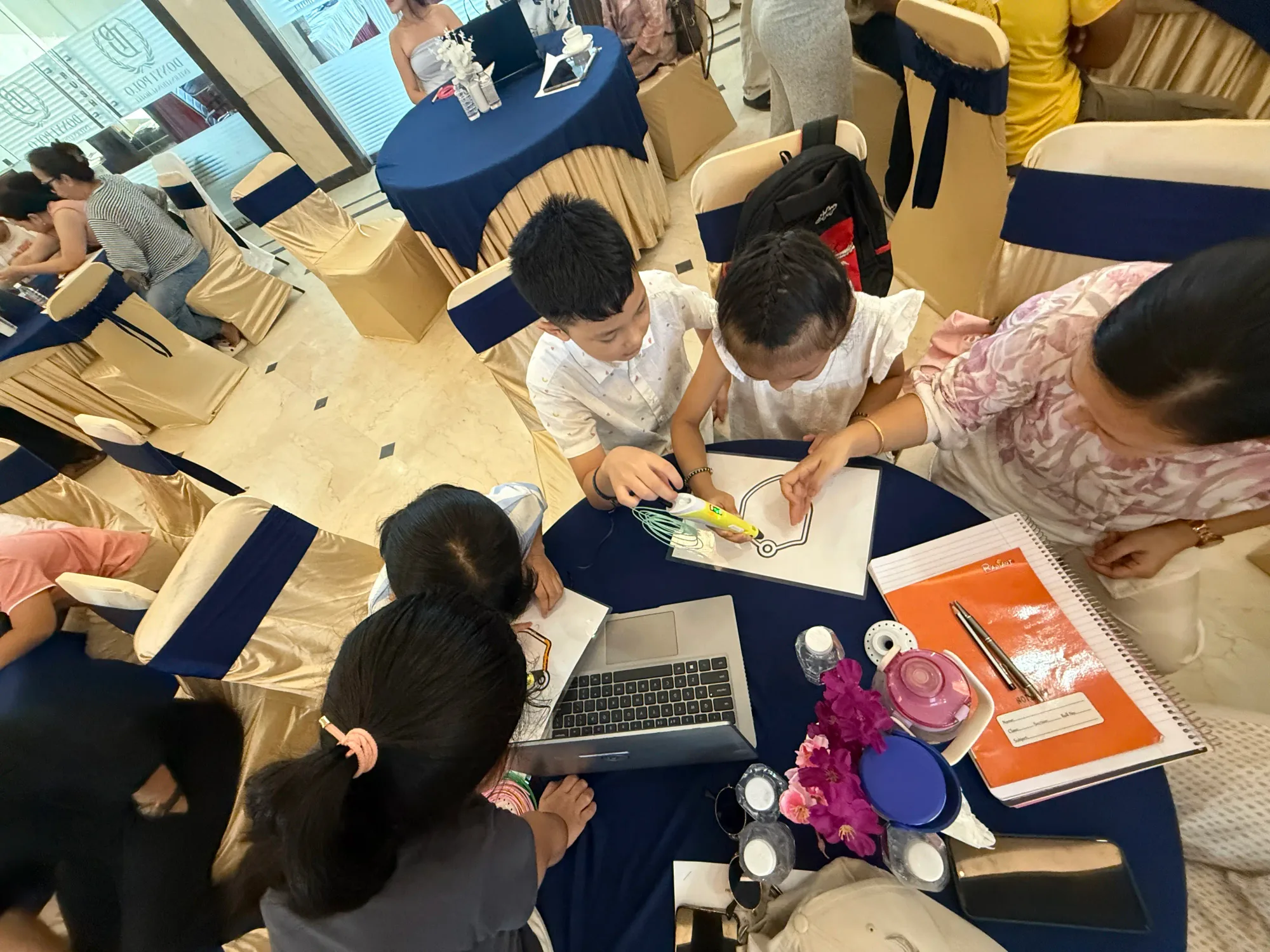
Older students went further, moving from tracing a given shape to designing their own outline first and then building it up in three dimensions. Several worked in pairs without being asked to, which is how the NEbots courses are structured anyway.
Meeting the robot kits
The second block moved students to the kit table: controller boards, DC motors, ultrasonic and infrared sensors, and the chassis parts these come together on. Nothing was behind glass. Students picked components up, asked what each one did, and then asked the question we were hoping for: what else could it be made to do?
- Micro-controller boards and how a program becomes movement
- Ultrasonic sensors, and why a robot needs to measure distance to avoid a wall
- Motors and wheels, and why two motors can steer without a steering wheel
- 3D pens and filament, the fastest route from an idea to a physical object
The questions parents actually asked
The most useful part of the day was not on our run sheet. Parents asked practical questions, and the same four came up repeatedly:
- What age should a child start? Age 6 is a realistic floor for our RoboSeeds level; younger children enjoy the 3D pens but struggle with the wiring.
- Does my child need a laptop or prior coding knowledge? No. Kits and hardware are provided, and every level starts from zero.
- Is this only for children who are already good at maths? No. Hands-on building tends to help the students who find textbook science abstract.
- Do the classes run during school term? Yes, batches are scheduled around school hours in Itanagar and Naharlagun.
We don't teach subjects. We build abilities, which is why every session starts with hardware in a student's hands, not a slide.
A group photograph to close
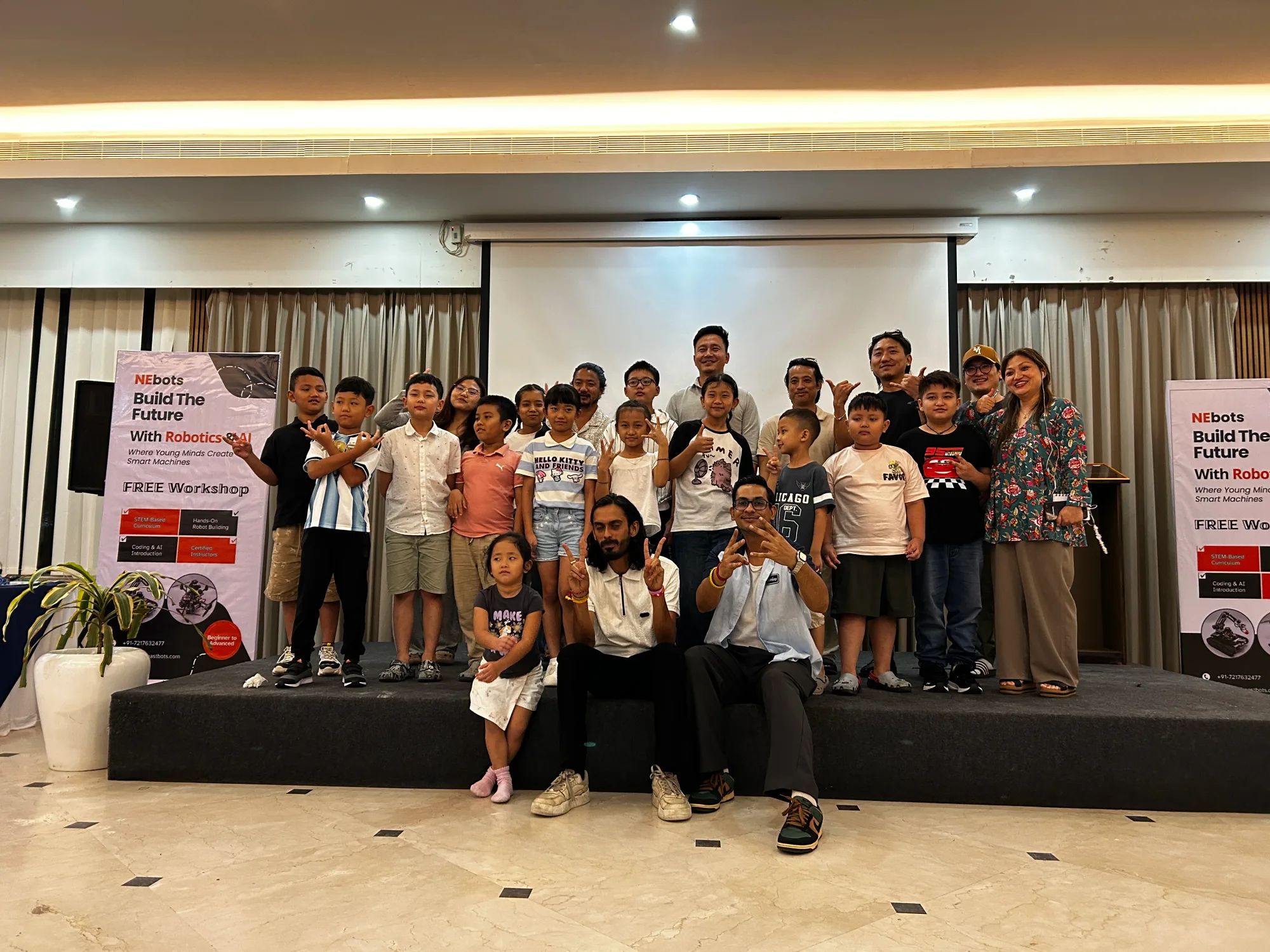
The workshop closed with everyone who stayed to the end crowding onto the stage for a photograph. Judging by how long it took to clear the room afterwards, the questions were not finished.
What comes next
This was the first free NEbots workshop, not the last. If your child missed it, the same hardware and the same mentors run year-round in our courses across Itanagar and Naharlagun: RoboSeeds for the youngest builders, then AI, drones and coding as they grow. You can see the full photo gallery from the day on our events page, browse the course catalogue, or contact us to be told about the next free session first.