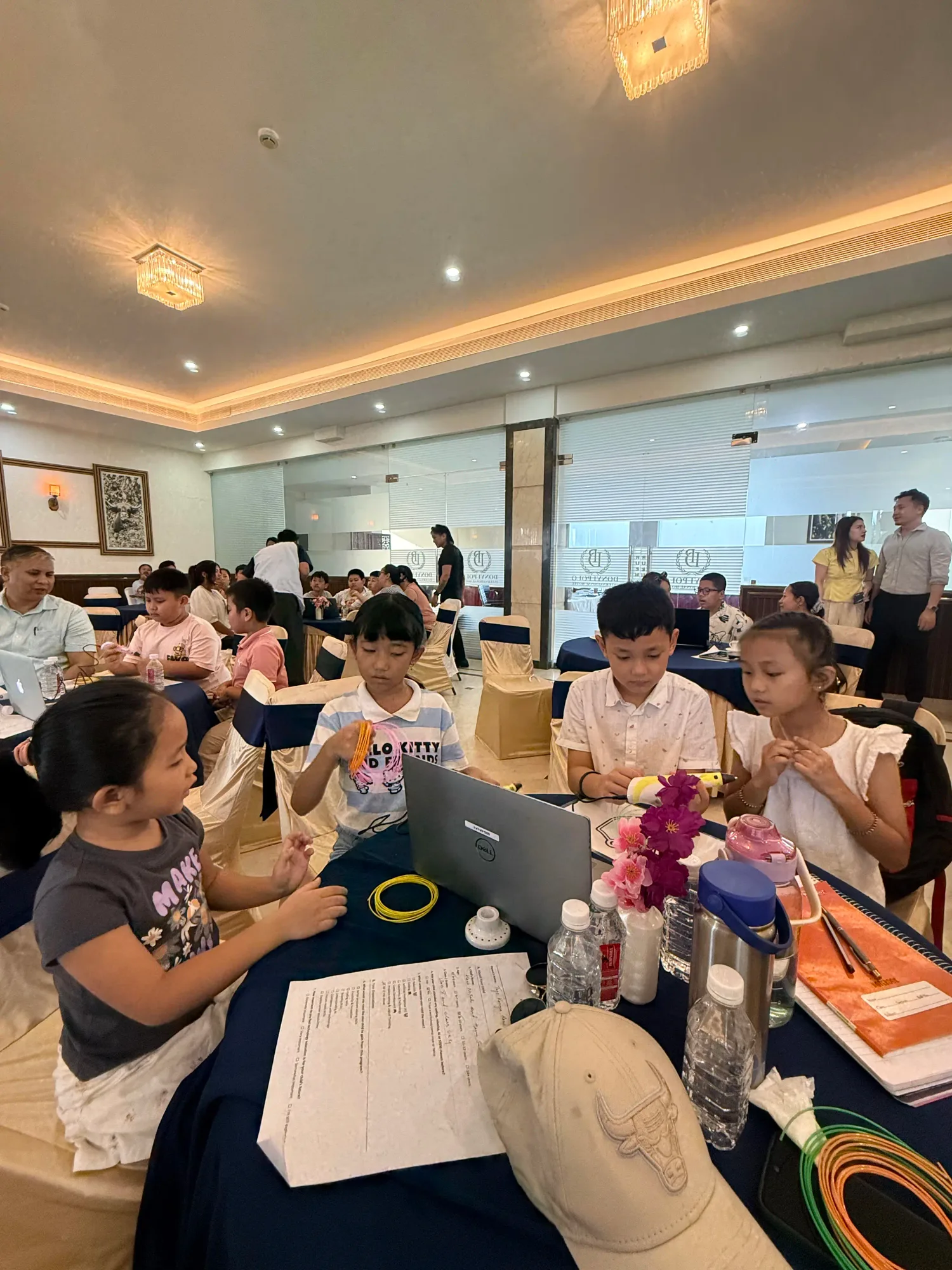
The first edition of RoboSeeds Level 1 filled up. Seats for the batch beginning 12 September 2026 at the Donyi Polo International Hotel in Itanagar are gone, and new batches are launching soon. This article still covers everything worth knowing before the next one opens: what actually happens across the 24 sessions, what your child takes home, what the fee includes, and how to get a place.
Seats are full for the September 2026 batch. New batches are launching soon, so call +91 72176 32477 to be added to the list for the next one.
What RoboSeeds Level 1 actually is
RoboSeeds is the first level on the NEbots robotics path. Students work on a real BBC micro:bit, the same microcontroller used in classrooms in more than 60 countries, and they program it using drag and drop blocks rather than typed code. Nothing on this course is simulated and nothing is watched on a slide. Every session ends with something that lights up, moves or reacts, and the child can explain how it works.
That last part matters more than it sounds. A child who can tell you why their robot turned left has understood the logic. A child who only saw it turn left has watched a demonstration. The whole course is built around the first outcome.
Batch details at a glance
- Starts: Saturday 12 September 2026
- Schedule: Saturdays and Sundays, 24 sessions across three months
- Ages: 6 to 14, with no prior experience needed
- Venue: Donyi Polo International Hotel, Itanagar
- Fee: Rs 14,999 for the full course, with the complete kit provided
What your child builds
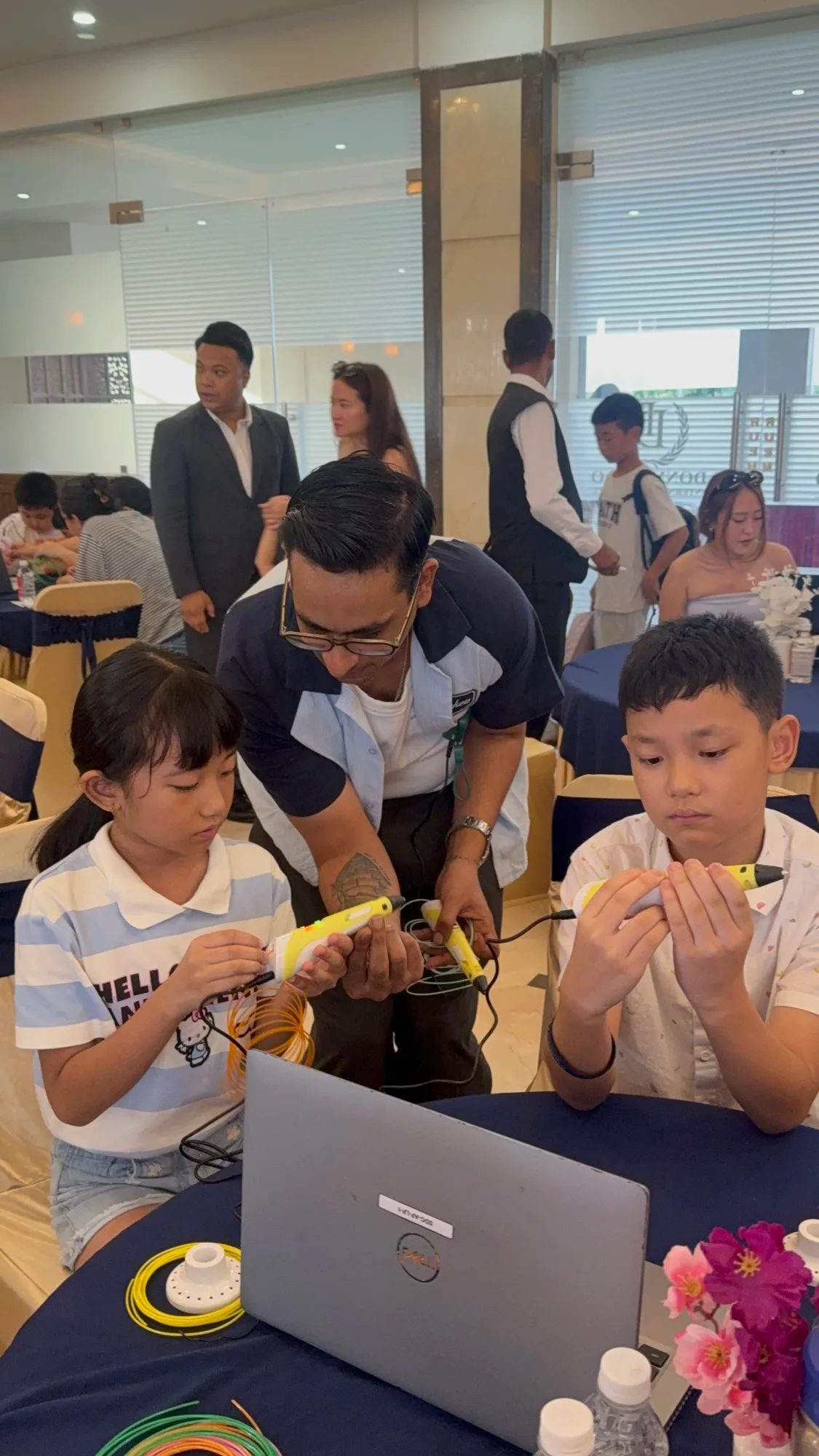
Students do not collect worksheets on this course, they collect working machines. Across the level they build:
- A badge that lights up with their name and their own animations
- A wearable they choose, such as a step counter or a shake to roll dice
- A motor driven fan they wire and code themselves
- A strip of neopixel lights cycling through colours they picked
- A fruit guitar, where bananas become piano keys and conductivity stops being abstract
- A robot that drives, turns and stops when it senses an obstacle
- A capstone project of their own design, demonstrated live to parents
How the 24 sessions are structured
The level moves in five phases, and each one closes with something the child can do that they could not do before.
Sessions 1 to 4: what a robot really is
Devices, inputs and staying safe online, then the sense, think and act loop taught as a game. By the end of the phase your child can explain what makes a robot a robot, and has run their first program.
Sessions 5 to 10: first code, first circuits
Sequencing logic, a wearable build of their choosing, then motors and actuators. They finish this phase having built working circuits and knowing why the light comes on.
Sessions 11 to 16: super senses
Four different sensors, including the compass and the light sensor, plus the fruit guitar. Students learn to name what each sensor feels and how the board reacts to it.
Sessions 17 to 21: make it yours
Debugging taught as a puzzle game, and personal twists on earlier builds. This is the phase where children start saying let us try again instead of giving up, which is the single best sign the course is working.
Sessions 22 to 24: showcase and certificate
A capstone of their own choosing, a live demonstration to families, and a certificate that was earned rather than handed out.
Why a micro:bit and not a toy robot kit
Plenty of children receive a robot toy that snaps together, runs a fixed set of tricks and is forgotten in a month. The micro:bit is a genuine microcontroller with a processor, sensors and general purpose input and output pins. The same board is used in school curricula across the world, and the concepts a child learns on it, such as inputs, outputs, loops and conditionals, transfer directly to Arduino, to Python and to every board they will meet later.
In other words, this is the start of a path rather than a self-contained gadget. RoboSaplings, the next level, moves the same student on to typed code on an Arduino Uno.
Is 6 too young, or 14 too old?
The batch runs from 6 to 14 because the work scales with the child rather than the calendar. Younger students spend longer on the guided builds and work in teacher supported pairs. Older students move through the early sessions quickly and put more into the capstone, where the project is entirely their own design. Session 1 assumes zero prior exposure from everyone in the room.
What the fee covers
The fee of Rs 14,999 covers the full course rather than a monthly instalment, and it includes the hardware:
- All 24 sessions across three months, on Saturdays and Sundays
- The complete micro:bit kit: board, motors, sensors, neopixels and batteries
- The final build, which goes home with your child
- Showcase day and the certificate on completion
There is no separate kit fee and no software to buy. Everything a student needs during class is provided.
How to get a place in the next batch
There is no online payment while the batch is closed, and nothing to pay now. The list for the next edition is kept by the team over the phone.
Call +91 72176 32477 or +91 99107 76777 and tell us your child's name and age. We will note you down and call you first when dates for the next batch are set, before it is announced publicly. Places in the first edition went in the order people asked, so it is worth doing early.
If you would rather see the class before committing to anything, book a free demo. Your child builds something real in that first session, and it costs nothing whether you go on to enrol or not.
Questions parents ask
Does my child need a laptop or a kit at home?
No. All micro:bit kits, motors, sensors, batteries and devices are provided during class. The final build is the piece that goes home.
Is it safe? They are working with electricity.
Everything runs on low voltage AA battery packs, the same power as a television remote. Safety rules are taught, repeated and tested from Session 3 onward, and mains electricity is never touched.
My child has never used a computer. Is that a problem?
That is exactly who the course was designed for. The first weeks build comfort and curiosity before any independent coding, with teacher guided pairs and heavy scaffolding throughout.
Can I see the full session by session syllabus?
Yes. The complete plan, covering every project, learning outcome and the NEP 2020 mapping for each session, is shared at your free demo class. Bring your questions to it.
Children who build things today will build the region tomorrow.
RoboSeeds Level 1 is capped by the size of the room and the number of kits, which is why the first edition closed as quickly as it did. If you want your child in the next one, call the team and ask to be added to the list, and book a free demo class in the meantime.